
.jpeg)

Group Think: One of my clients works at a large hedge fund. We recently had an interesting conversation and he mentioned that most of his friends and colleagues believe U.S. equities are expensive.
Now, I rarely listen to what other people think about the market, but these aren’t random people making predictions on Twitter. They’re incredibly smart investors with access to tons of research.
The stock market is often described as a voting machine in the short run and a weighing machine in the long run. Prices aren’t determined by whether something is objectively cheap or expensive. They’re determined by what investors collectively believe about the future.
If the majority of professional investors already believe stocks are overvalued, wouldn't that belief already be reflected in today’s prices?
Now, I'm not writing this to tell you that the markets are going higher. Valuations absolutely matter over long periods of time, and today’s starting valuations have historically been associated with lower long-term returns than buying when stocks are cheap. But short-term market movements are driven just as much by expectations as they are by fundamentals.
One of the reasons we don’t spend much time trying to forecast the next six or twelve months at VDB Wealth is because someone else always has more information than we do. Hedge funds, investment banks, and quantitative firms are all trying to answer the same question.
Our only advantage is having a longer-term time horizon. We don't need to win over the next quarter.
My dad spent his entire career in finance and always ended his emails with, "Buy Low, Sell High, and Read the Research."
It's hard for me to say this, but I don't know if I agree with him. I guess I need to come up with my own slogan. Any ideas?
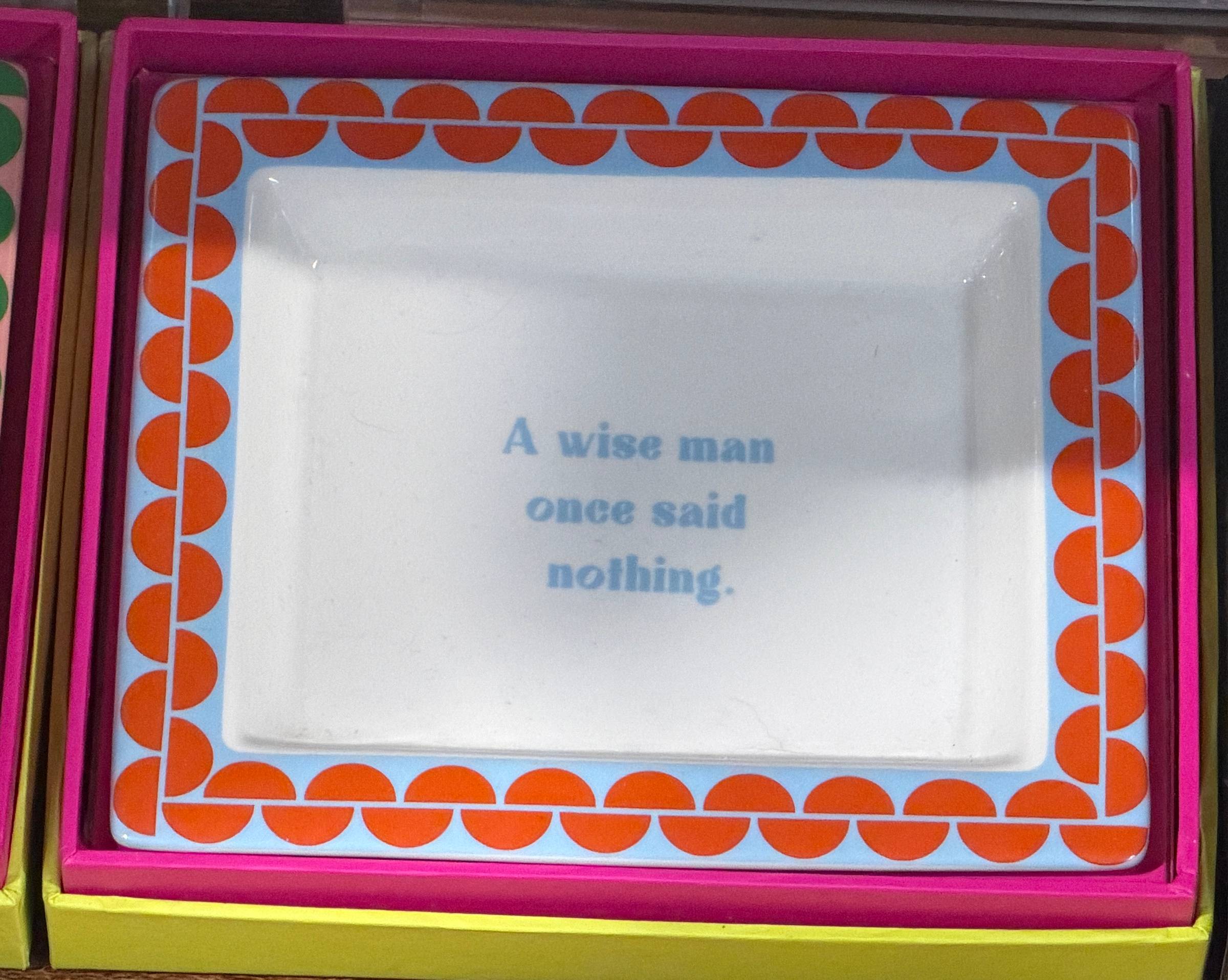
A Wise Man: Last weekend, I came across this plate while wandering through a local shop. It simply read “A wise man once said nothing.”
I laughed when I saw it, but the more I thought about it, the more I realized this plate deserves an Oscar.
When I started managing my first team, I was probably the worst boss ever. I thought good leadership meant constantly providing feedback. If I noticed something that could be improved no matter how small, I’d jump in and share my thoughts.
Over time, I realized that I was being stupid. One of the best changes I made was asking two simple questions before offering advice:
I’ve realized these lessons extend well beyond work.
How many disagreements with our spouse, friends, or family members start because we feel the need to fix a problem that no one asked us to solve?
Do people really want your advice? They probably already know the answer, but just need to get there on their own. I firmly believe that you can't change people. They need to want to change.
Of course, there are moments when difficult conversations can’t wait. Being a good friend, partner, or leader sometimes means saying the hard thing. But I’ve found that those moments are far less common than I once believed. They should be reserved for the big stuff.
So the moral this week? When your colleague writes an awkward email, think twice before critiquing it. If your spouse continues to hoard cups in his office and leave the cabinet doors open, just realize that they're not ready to change yet.......
Take the Vacation: I’m not great at taking vacations.
Even when I’m away, I usually check emails, answer a few texts, and jump on the occasional call. But I’ve realized there’s a huge difference between working for 30–60 minutes a day because you want to and not taking vacation at all.
This week, I blocked my calendar and won’t be taking client calls. It feels good.
So if you’ve been putting off taking time away because work feels too busy, this is your reminder. The work will still be there when you get back.
Go somewhere and be present with the people around you.
It’s good sh*t.
Disclaimer: VDB Wealth is a registered investment adviser. Information presented is for educational purposes only and does not intend to make an offer or solicitation for the sale or purchase of any specific securities, investments, or investment strategies. Investments involve risk and unless otherwise stated, are not guaranteed. Past performance is not indicative of future performance.

We work with a select group of clients to provide tailored, high-touch wealth management. Ready to see how we can help?
Our personalized process ensures you receive expert financial guidance tailored to your unique goals. Get in touch in the way that works best for you—fill out the contact form, send us an email, or schedule a call. However you choose to reach out, we’re here to help you build, grow, and protect your wealth.
VDB Wealth LLC is a registered investment adviser located in the State of Georgia. Registration as an investment adviser does not imply a certain level of skill or training.
The information on this website is for informational purposes only and does not constitute investment, legal, tax, or financial advice. Nothing on this site should be interpreted as a solicitation, offer, or recommendation to buy or sell any securities or investment products. All investments involve risks, including the potential loss of principal.
VDB Wealth LLC provides investment advisory services only to residents of states where it is properly registered or exempt from registration. Past performance is not a guarantee of future results.
VDB Wealth LLC | (415) 209-5862 | contact@vdbwealth.com